
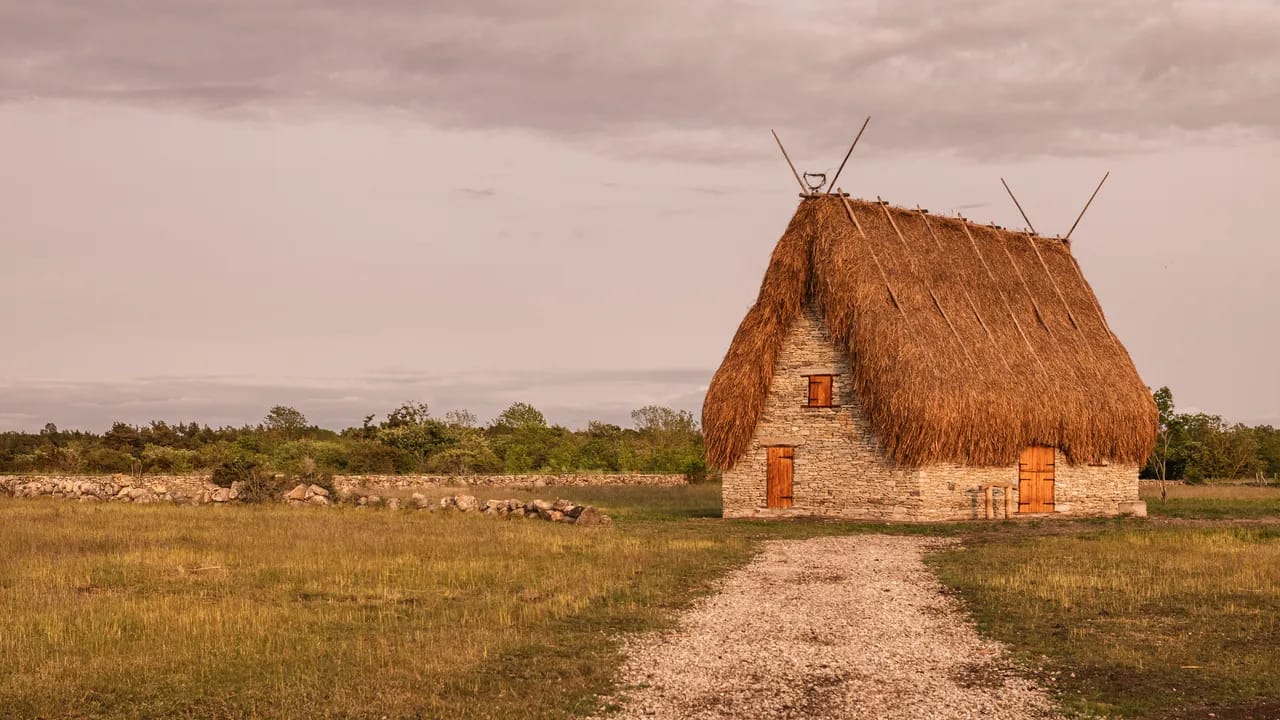
Last summer, Sibbjäns—the nearly 200-acre regenerative farm and hotel in the south of Gotland, a sun-bleached Swedish island 45 minutes via prop plane from Stockholm—had a soft opening for friends and family. The in-the-works property had been the talk of the island for six years and counting, while the owners, two couples who are Swedish but not Gotlandish (“a local told me it takes seven generations to become a Gotlander,” says Susanna Rönn, one of the owners, who has had a house on Gotland since 1994), set about developing the estate.
Under their stewardship, 18th-century limestone farm buildings were restored with traditional features, such as wooden gutters and dry-laid stone walls, and supporting infrastructure was installed to suit the Mediterranean-like climate, including a rainwater recapture system and irrigation pond, and circulating showers that filter and reuse water in real time. Food on the farm is grown organically, in sight of the hotel and restaurant, and the hotel pool is kept clean with purifying aquatic plants rather than chemicals (it looks like a straight-edged, opaque lagoon). Over the years, the sustainable vision for Sibbjäns became a deepening passion project, and one without an obvious endpoint. By 2025, it felt like the time had come to hang a shingle out and learn on the job.

Photo: Courtesy of Sibbjäns
Back to last June. The tennis court, which is set in a meadow behind a low stone wall built to look like a ruin, wasn’t finished, and neither was the yoga hut, a structure inspired by Gotlandish threshing barns. There was not enough staff to handle the day-to-day churn of the hotel. “We had to bring in all of our friends and family,” says Rönn, “the kids were running around working, one of our friends who’s a lawyer was making the beds. We didn’t know what we were doing yet, but we also loved it and didn’t want to say no to guests.” Her husband, Pontus Rönn, the catch-all fixer at Sibbjäns, describes that summer as “like a real-life Fawlty Towers, and I was Basil Fawlty.”