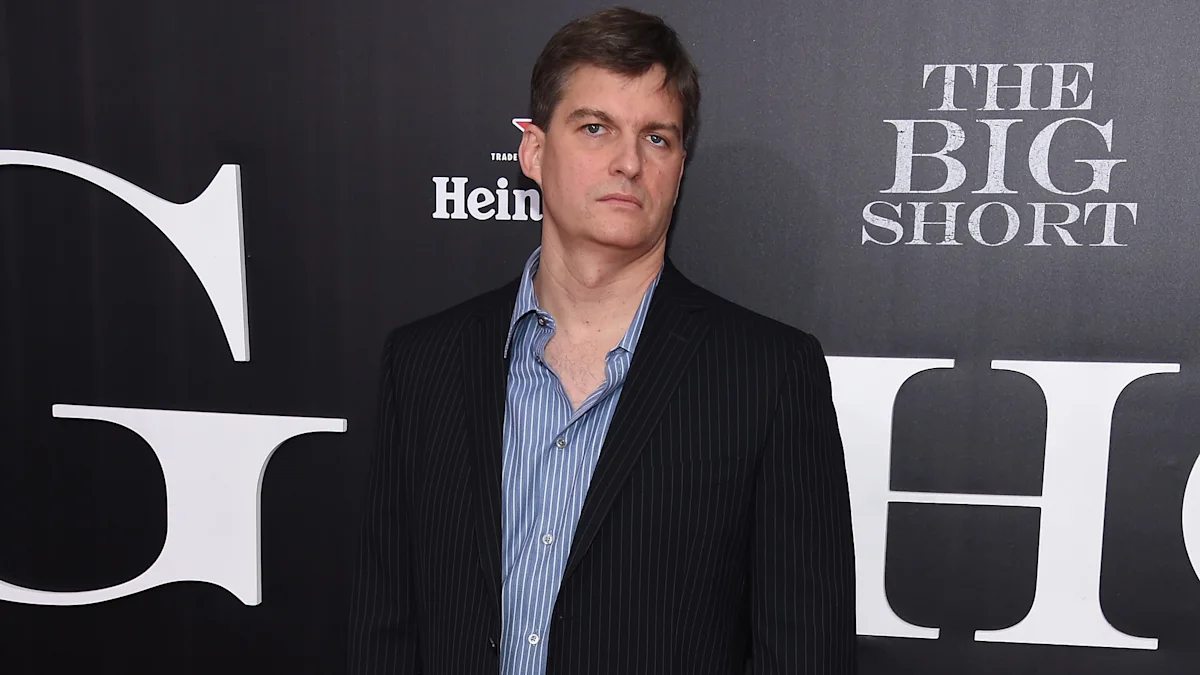
Watching a stock you own fall by half can make you want to panic-sell or pray the price returns to your entry point so you can exit. But Michael Burry, made famous by the film The Big Short, used a June Substack post to argue that selling is the wrong move (1).
He wrote that once you’re deep underwater on a stock, it doesn’t matter how much you paid for the stock. The only number that counts is the stock’s current price, because that’s where your next gain or loss will be measured from.
Must Read
Burry, who is known for predicting the U.S. housing crash, has spent the past year warning that the market appears to be a bubble thanks to AI names like Nvidia and Palantir. As a result, he closed his fund, Scion Asset Management, in November 2025 (2) to focus on his paid Substack, CassandraUnchained (3).
So, writing an article about encouraging a holding pattern, from a man known for betting against things, naturally stands out.
How a stock down 90% still pays off
Burry walked through an example. Say a stock falls from $100 to $10 and the business is still actually worth $30. Then a value investor buys at that $10*,* but then it keeps falling all the way to $5 — a 50% loss for this investor.
Almost everyone sells right there, but Burry says you don’t have to. Years later, the stock is back at $30. Measured from that $5 low, Burry called it “a six times return in 10 years” — about 20% a year (1). Even from the investor’s $10 purchase price, it’s still a triple.
“What I describe here is almost exactly WBD,” Burry wrote (1), naming Warner Bros. Discovery (WBD). The recovery, he added, didn’t take a decade — these things usually don’t.
Burry’s point is that once you’re underwater, the only price that matters is the one you could sell or buy at now.
“That is the price from which any future return will come,” he wrote (1).
If you have the patience to wait out the recovery, the upside can go to the investor who held on when everyone else gave up. Burry says that selling just to put a painful position behind you is usually the wrong call in the long run.
What actually happened to Warner Bros. Discovery
The $100, $5 and $30 in that example are round illustrations, not WBD’s real prices, but the actual story is somewhat similar to what happened to WBD.
WBD wasn’t even a stock most of its first owners chose. AT&T spun off WarnerMedia to its shareholders in April 2022 and merged it with Discovery. A lot of retirees and other AT&T holders suddenly ended up with WBD shares they didn’t actively buy (4). The company started with a market value of about $59 billion (5), then spent the next two years getting hammered by debt, cord-cutting (6), the loss of NBA rights and a $9.1 billion writedown (7). By the summer of 2024, the stock had fallen below $7, and the company’s market value had shrunk to around $17 billion (8). Plenty of those involuntary owners probably sold somewhere on the way down (9).
Then it turned around. WBD more than quadrupled off that bottom, peaking near $30 and (10)trading around $27 now (10). It’s not the same as Burry’s six-times example, but it’s the same basic idea: a stock can keep falling after it already looks beaten down, and the investor who holds through it can still catch a huge rebound.
Patience wasn’t the whole story, though. A takeover fight helped too. Paramount Skydance Corporation and Netflix bid against each other for WBD, and in February, the board accepted Paramount Skydance’s offer of $31 a share, or about $110 billion including debt (11). The U.S. Department of Justice (DOJ) (12)cleared the deal on June 12 (12). A real buyer putting $31 on the table is a big reason the stock recovered. But the deal is still facing a lawsuit from a group of states led by California, so the price could still move on the next headline (13).
What this means if you’re sitting on a loss
The useful idea here is “anchoring.” Investors fixate on what they paid and tell themselves they’ll sell once they’re back to even, but the market does not care about your purchase price or cost basis. Your return from today is measured from today’s price, not whatever you spent when you got the stock.
That said, Burry’s example only works if the business really was worth more than the stock price the whole way down. In his setup, the stock got cheaper, but the company underneath it still had real value. WBD recovered because actual buyers decided its studio, HBO Max and cable channels were worth $31 a share.
Plenty of stocks that fall 90% are cheap for a reason and never recover. Some keep sliding all the way to zero. So the real lesson is not to hold every loser and hope. It’s to tell the difference between a stock that is down because the market got it wrong and one that is down because the business is actually breaking.
And notice what Burry isn’t doing. His hedge fund is closed, so he’s not handing out a stock recommendation here. He is saying that once a stock is underwater, your original purchase price shouldn’t be the thing that decides what you do next.
You May Also Like
Join 250,000+ readers and get Moneywise’s best stories and exclusive interviews first — clear insights curated and delivered weekly. Subscribe now.
Article Sources
We rely only on vetted sources and credible third-party reporting. For details, see ourethics and guidelines.
Substack (1); Reuters (2), (13); CNBC (3), (4); Companies Market Cap (5); The Wall Street Journal (6); U.S. Securities and Exchange Commission (7); Variety (8); Barron’s (9); CNN (10); NBC News (11); CBS News (12)